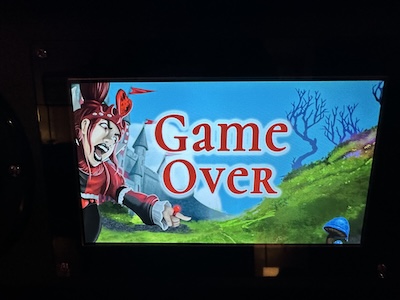
Pinball in my House, 2026: Alice Goes to Wonderland
So, an ongoing background story in this blog has been that I quite like to play pinball. A problem with pinball, though, is that it is an intensely physical game. Video pinball machines, modded or otherwise, struggle to scratch the same itch, even though they have major benefits, like multiple tables. And many manufacturers have, over the years, tried to make a home pinball machine work. Now we have another: Wonderland Amusements. Let’s take a look.
So, first off, a few ground rules.
- What happened to the modded ToyShock? Destroyed in a move, unfortunately. Apartment life is rough for projects like that. If I went back and did it again, “being able to be taken apart” is something I would have taken more seriously. Sadly, this means I can’t directly compare the two.
- I contributed to the Kickstarter for this pinball machine. That being said, I spent all my own money on it, and have had no contact with Wonderland Amusements beyond the usual Kickstarter updates. Still, some might consider that a personal investment.
Wonderland
Wonderland Amusements is a new company, though they have some pedigree– many of the same minds behind Arcade1up, whose Street Fighter cocktail table I played back in 2019. So when they had a project for a sub-$1000 home actual pinball machine, I decided to take the risk.
A few things happened since then between ordering and getting the machine; this most significantly included moving back to an apartment. So I probably wouldn’t have bought it today. Hey, that’s Kickstarter for you, right? So my dear wife will just have to deal when two large cardboard boxes were delivered to the apartment, full of goodies.
Building the Rabbit-Hole
Unfortunately, this is a lot more of a DIY project than the ToyShock. The ToyShock came in more or less two pieces, the headboard and the table itself, and you just put one on top of the other. The mechanics of the machine are in one piece, but you have to build the box around it.
Now, the boxes are easy enough to build if you’ve built IKEA furniture before, or for that matter an Arcade1up. While the pieces were thoroughly packed, I did get hit with some shipping damage. A side panel on the table suffered a puncture from something.
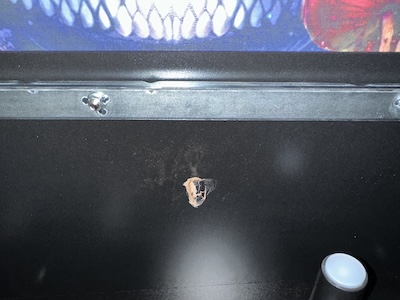
It doesn’t look too bad here, and is thankfully below the playfield. Unfortunately, it’s also visible from the outside. I have not contacted Wonderland Amusements about this; this is a hard piece to replace once installed and I just wanted the damn machine by the time I noticed this. The “wood” here is very thin MDF, much like Arcade1up cabinets. It’s fine, but it’s not resilient or durable. (The playfield does seem to be actual plywood)

As for assembly, I will note a few issues; the first of which is that they used these little wooden pins for spacing and for alignment. The problem is the pins are smaller than the holes, so they just fall out, making this more finicky than it needs to be.
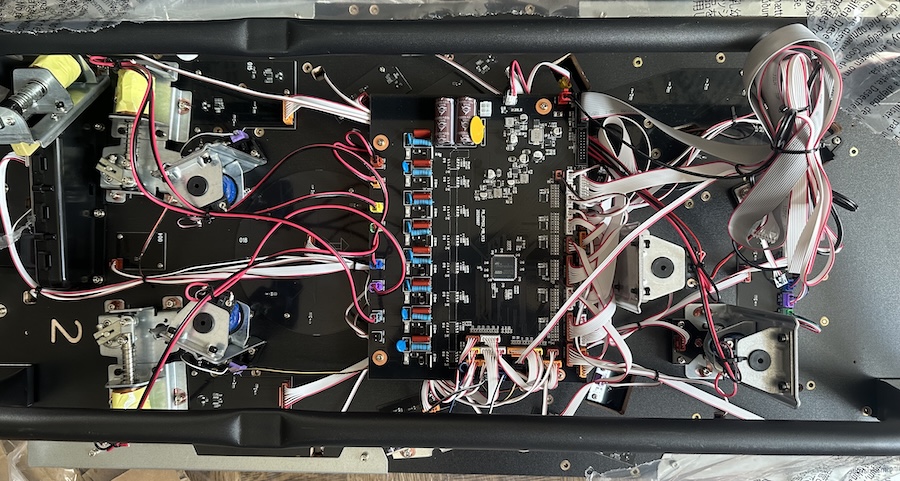
The bigger issues are my own fault, but I will include for your elucidation, should you choose to build this. Here’s a photo I took while building. You can also see the power supply here.
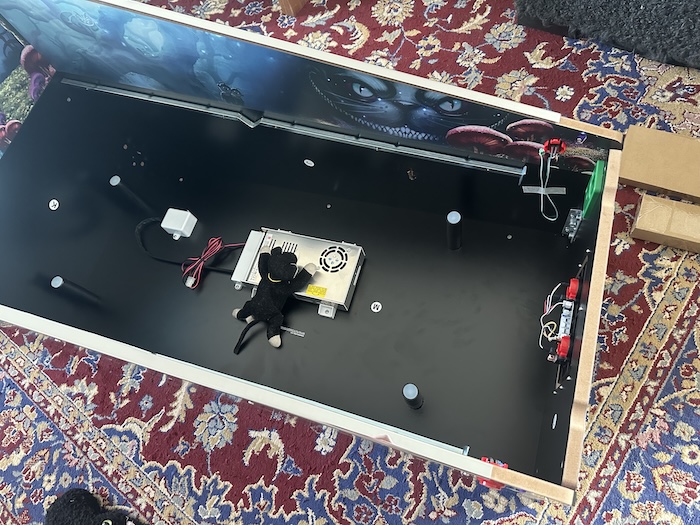
Notice there are four pillars sticking up. Those were pre-installed; at the time, I misread the assembly instructions and assumed that I was supposed to install them, and therefore that as often happens with Kickstarter pieces, the instructions were out of sync with what I got, and therefore the four pillars were just pre-installed now.
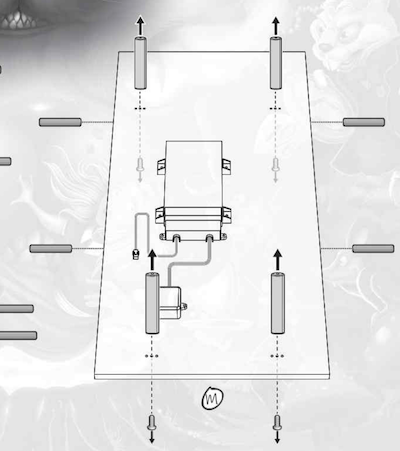
This was wrong, and I only learned this much later, when I went to add in the playfield mechanics. The four pillars are just for convenience while shipping, and play no role in the final game, and in fact foul the playfield. While struggling to get it to fit, I slightly damaged one of the playfield pieces– unfortunately, while the damage is almost invisible, it was to the Queen of Hearts’s castle, and everyone familiar with Alice in Wonderland knows that the integrity of my neck is likely not long for this world. Alas.
The other error I made was putting the acrylic top on. (Yes, acrylic, not glass. I get it, shipping is expensive– still, glass would’ve been nice, and ToyShock managed it) You can not slide it in, you have to remove the side rails. No really, you have to, even if you think you can make it. I was hoping I could make it and slightly damaged things. Minor issues, but hopefully you won’t make the same mistakes I did.
Honestly, putting it together was kind of fun. The best part is getting to install playfield toys; a bouncy Mad Hatter, the Queen of Hearts’ Castle, the Hookah Caterpillar. All the electronics are self-contained, and the most you have to do is attach a few cables between them. I got a shot of the CPU while it was outside the box.
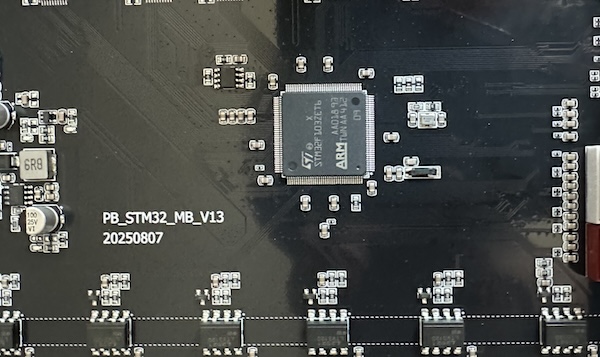
An STM32F103ZET6 ARM, a Cortex-M3 32-bit ARM CPU core. That’s more than plenty; there might be some additional pieces behind the screen for video output, but remember, all the gameplay comes from the real world. Still, the bootup time is pretty long, so a faster CPU might’ve helped there.
One minor complaint– the instructions never actually tell you where to put in the balls! Eventually I realized you just roll them down the field into the outlane.
The machine
So, now you have a pinball machine in your slightly pink-lit house. So what?
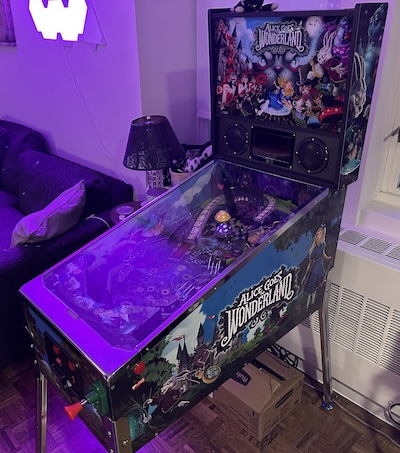
The playing height is pretty good for me at 6’1”, which is good; I ended up replacing the ToyShock’s legs with reproduction legs meant for a Gottlieb wedgehead, and I was expecting to have to do the same here. Given Arcade1up’s small default height and reliance on risers, I was afraid of the same.
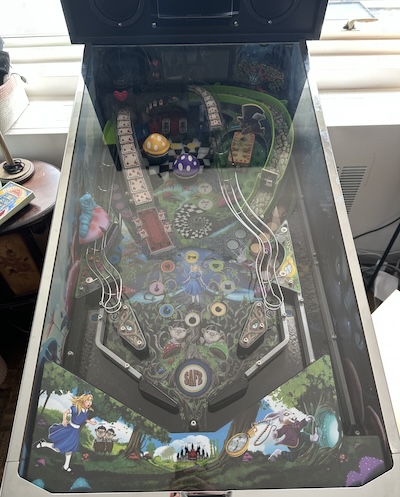
The playfield is simple, but has a few loops and pop bumpers. If you like 1980’s machines I think you’ll be right at home here, and I like 1980’s pinball machines. It’s definitely less elaborate than some modern tables, though.
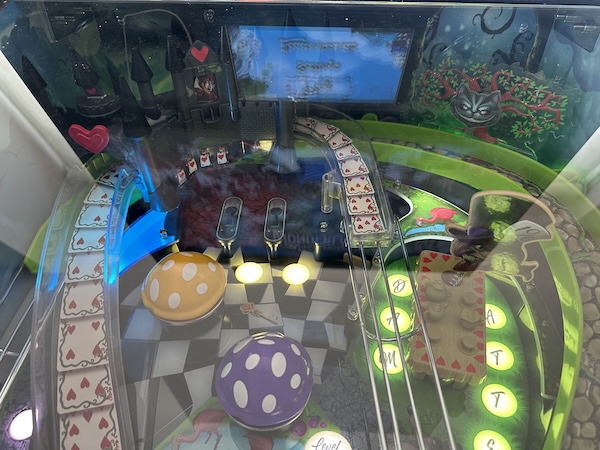
Though it’s clearly a thinner MDF, there are definitely a few nice points towards long-term use. For example, the area around the flipper buttons, where your hands will rest, has a plastic layer. There’s a protective film covering that you can remove, but overall this should protect the art in those areas a little longer. Damaged control panels from usage was a big problem on Arcade1ups with heavy use so that’s good to see.

The launcher is purely mechanical. In fact, it’s completely disconnected from the playfield and features no electronics at all. Alice Goes to Wonderland does have a multiball, but it’s based around locking in balls first, because the machine physically can not fire balls onto the playfield on its own. Tons of pinball machines do this, so it’s not a big problem. I have noticed a few glitches during multiball where it seems to lose track of how many balls are on the playfield; hopefully firmware updates will fix this. A neat thing about the “ball lock” area is that you can reach it with a skill shot off the launcher.
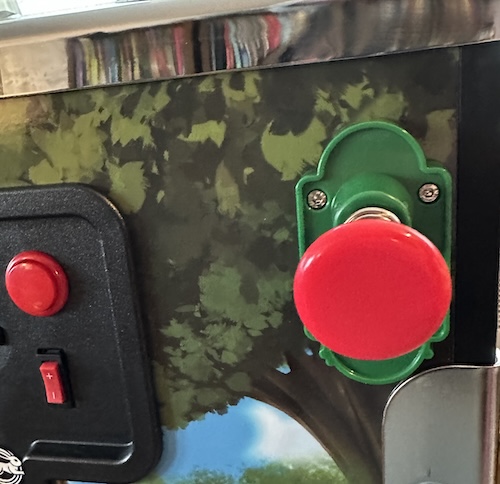
I know there are a lot of very good pinball machines that don’t have mechanical launchers– Terminator 2, Attack from Mars, etc. But I am glad Wonderland went with one here. Especially on simpler tables, a mechanical launcher adds a lot of control. This one feels pretty good.
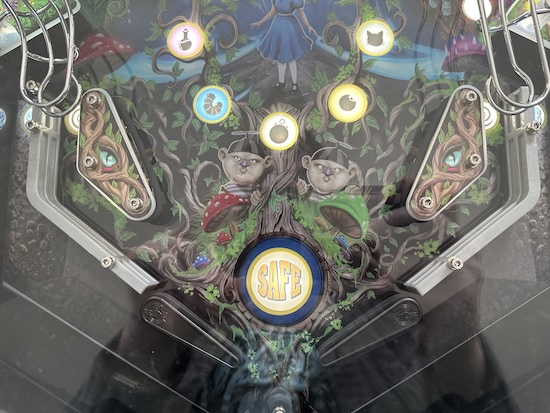
The flippers similarly feel nice, with a quick reaction to the buttons, and a nice solenoid thud. Despite this, the flippers are my biggest long-term concern, but only because growing up, we had a Firepower II and that thing never could keep its flippers working for long.
Notice the big “SAFE” light, by the way. I notice that this machine is pretty generous with giving you a new ball when you drain yours, especially early on; that’s a nice touch that most modern pinball machines have, so it’s good to see here. Especially for home use, where you’re not really trying to extract every quarter.
The screen’s the thing
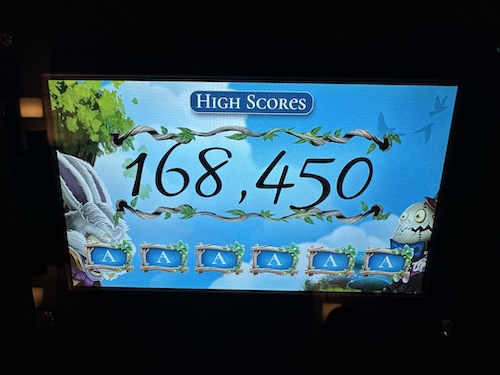
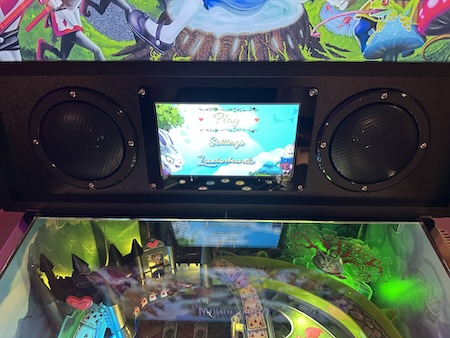
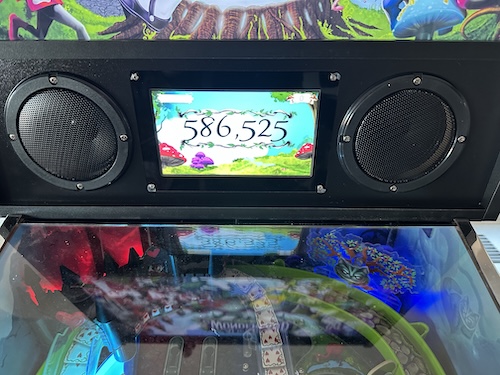
The score is displayed on a small LCD screen. This is pretty typical, and while I would’ve loved an LCD or a big clicky 1960’s style score counter, I have to admit the LCD has a lot of advantage over them for this usecase, especially if you connect to the internet services; have fun punching out your Wi-Fi password without a screen. And there are a few effects like timers, graphics, and the sort to make it fun. The screen is colorful, bright, and has a high enough resolution that I won’t complain.
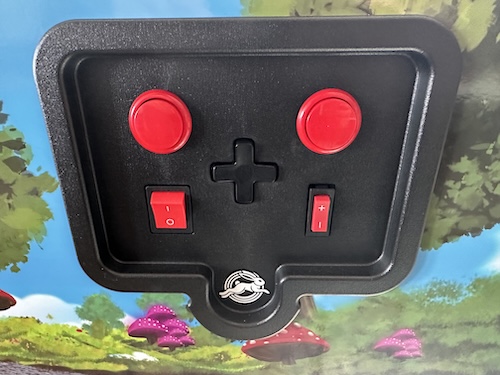
There are a series of controls on the front, in lieu of a coin slot. A bit of an annoyance is that the two buttons are the same color, but are not the same; the left one is a “confirm” button and the right one is a “back” button. Still, it’s not like you’re going to be looking at them; as far as I have seen the front controls don’t play a role in the game. Obviously the audio controls only control the audio from the screen; those ball noises are real, how would controlling them even work?
Like a lot of modern pinball machines, Alice can go on several missions throughout the game, noted by series of lights surrounding her and different graphics on screen. The game is definitely tuned for ease of play. There’s plenty of speech (though Alice with an American accent is so strange! I’m sorry) and basic images; no real video, though, but why are you playing a pinball machine and expecting to look at the screen?

One thing that might a useful update though, is some kind of attract mode when you’re not playing.
Conclusions

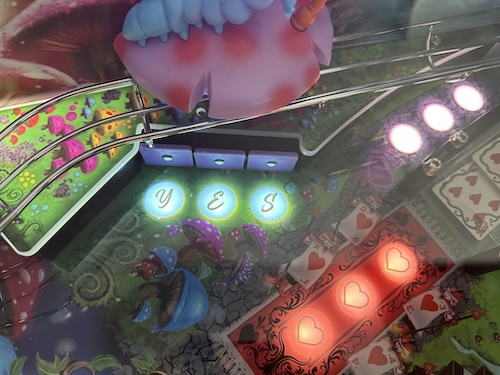
A lot of companies have tried to enter the home pinball market. And none of them have lasted long. The problem is, pinball is inherently expensive. Alice Goes to Wonderland, if you buy it today, doesn’t meet the sub-$1000 price point the Kickstarter aimed for, though it’s still a lot less than something like Stern Pinball’s $6000 home models, you do get a lot more machine. For example, Alice Goes to Wonderland lacks proper drop targets, relying on LED lights on the drop-like panels instead.
Still, overall for someone just a week or two in, I’m happy I got in on this one. Only time will tell how long it remains usable, and how repairable issues end up being. (Already, the Mad Hatter has fallen off his spring; that should be an easy fix, at least) Judging by their website, Wonderland isn’t a one-and-done, at least– they claim to have a Teenage Mutant Ninja Turtles licensed game coming soon.
Of course, there’s the other problem with this market. See, I’m in an apartment now. I’m pretty happy with the one machine, but that’s one and done for me. I just don’t have room for a whole bunch of these, and I imagine a lot of other people have the same problem– this also proved an issue for Arcade1up. But hey, I’m not here to run a business, I’m here to play a game. And so far I’m enjoying this one.